 The 5 day forecast showed an opportunity to push hard for 3 days and reach the settlement on Atka before some bad weather grounded us. We took the chance and paddled a couple of 10 hour days to put us 21 miles away on the third day. We started the day with a 13 mile crossing of a large Bay in a side wind. The sails helped us maintain a little over 3 knots, increasing to 3.5 when we decided to head inland slightly to improve the angle.
 A few people have made comments that we somehow aren’t kayaking if we are using sails. Or suggested that it’s cheating or against the rules. We don’t really have any rules and if it makes us quicker and therefore safer in this remote, windy, cold, unpredictable environment then I’m all for it! We are still paddling but the sails make us quicker in certain conditions, much like a longer, sleeker kayak would or even a rudder. In other ways, they make our journey trickier – gusts can offbalance you more eaisly and the sail and lines on our deck could get tangled or caught on rocks or kelp. Rolling with a sail up is something we aim to avoid as we need to release one of the lines underwater before attempting it.
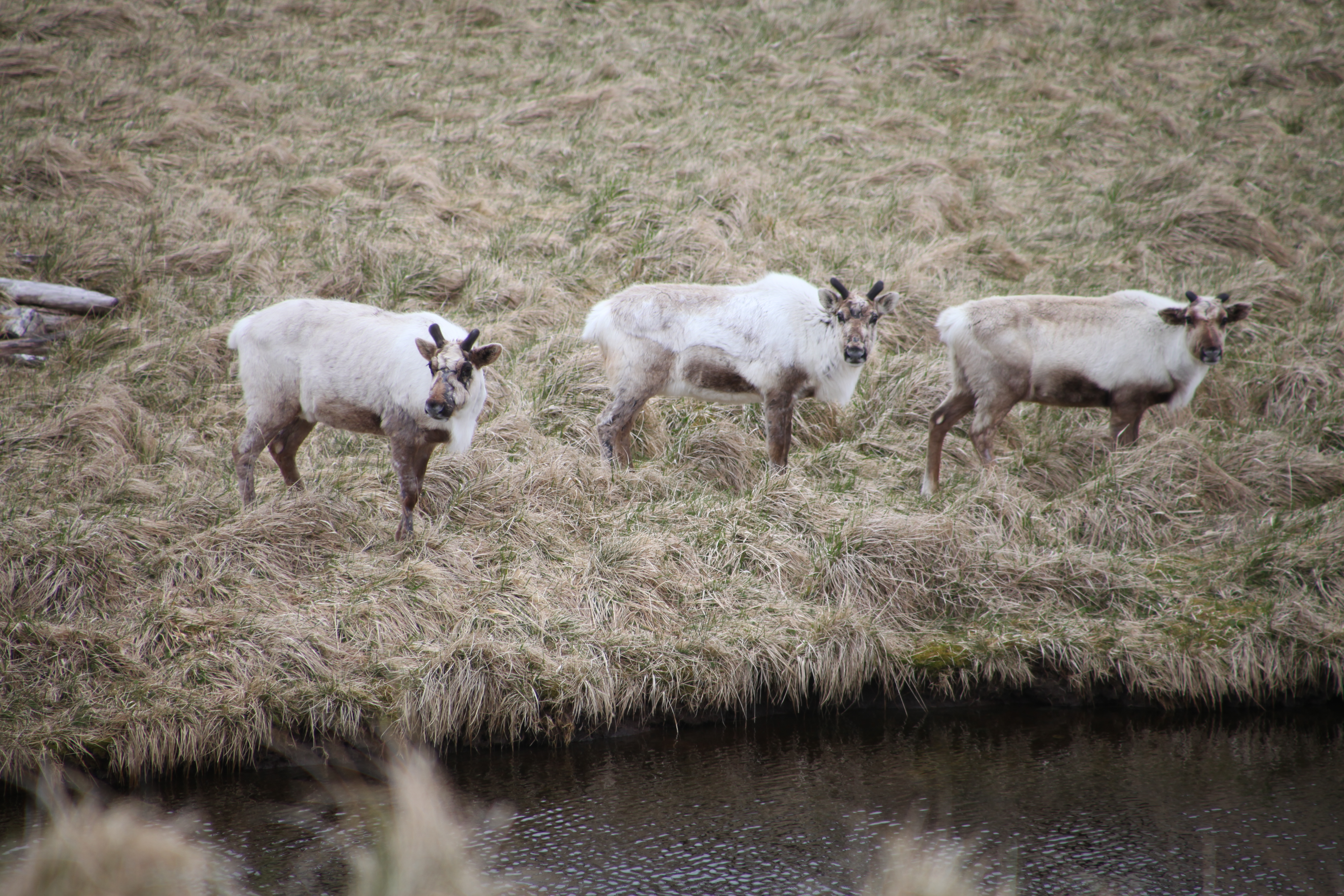
 I digress…. I wanted to talk about Atka. I didn’t know much about this city of 75 people before coming here. I knew they had a fish processing plant, 3000 reindeer and an airport that is serviced from Dutch Harbour 3 times a week. Local resident Crystal Dushkin agreed to let us ship some food and supplies ahead to her. When we arrived, she arranged for many of the Atka folks to meet us at the beach and perform a traditional drum dance. The kids got to leave school early so they were happy! Both Sarah and I found it really moving to be greeted in such a dynamic and special way.Overall for me sailing is a new and exciting extra dimension to a paddling trip and I like the fact that we are travelling through waters that the Aleuts paddled hundreds of years ago. I’ve seen old photos of their iqyax (kayaks) with sails- so I somehow feel like we’re using good style.
 We soon learnt that the dancing is just one way that Atka is a hotbed for preserving local Aleut culture. It’s the only place where the ‘Unangax’ language is currently spoken in every day conversation. They have a cultural camp every year where the youngsters are taught traditional skills like making kayaks (iqyax), weaving grass baskets, dancing and harvesting sea food. On our first night we were treated to Sea lion soup and reindeer bolognase. Last night we had battered halibut and three salmon dishes – breadcrumed, baked and smoked. Today Crystal and Danny took us to the seashore at low tide and we harvested sea urchins, chitons and sea weeds. They showed us how to eat the various parts so we can supplement our diet from now on along the chain. I really enjoyed the sea urchin eggs and will definitely be finding some more of them.
 It’s always really interesting to chat to people who live in a remote and unusual place. Atka has a happy, friendly feel to it as well as having an important role in keeping alive the Unangax culture. The people seem to love being so close to nature, living from the land and their lack of ‘big brother’. I feel privileged to have spent a few days enjoying an insight into a way of life that is often overlooked in the fast pace of modern life.
We’ve had 3 days in Atka – the first two were too windy to paddle (a 25knots headwind). Today was still a headwind but more like 10-15knots. We simply weren’t organized enough to leave this morning after spending the first two days in a whirlwind of being looked after, fed, shown around and taught what goodies will help us survive if we end up stuck on a remote island for longer than our food lasts. In the end we decided not to rush off this afternoon, but to leave first thing tomorrow morning and have a full day of paddling… albeit into a headwind still.
 So thanks to the kind folks of Atka for welcoming us so warmly. And onwards from here until our next brush with civilization in Nikolski, an even smaller community of about 16 people 250 miles along the chain. I expect this next leg to be our most challenging – with several long crossings through tidal passes with not entirely precise information about the currents. Once across, the landings are scarce and affected by the ever-present swell. While I’m looking forward to spending some time in this rarely visited part of the world, we’ll be hoping for some good weather to let us reach Nikolski before our food (or patience) runs out!
 You can follow our progress via a tracker on Sarah’s website. Sarah varies how often it updates – often every 6 hours, but we might make it more often during the tricker crossings. Sarah’s blog is here.
I try to put up a photo on Facebook every day (it formats it weirdly if I do it onto my blog), and Sarah puts out regular tweets. I’ll also try to write a short blog post most days on here.


You must be logged in to post a comment.